
Sleepwalking into dystopia
A brief reflection from the end of time

It’s 7:24am on July 24, 2026. I’m writing this from the upper floor of my townhouse, where the temperature has stayed around 27°C for the last two days. A steady hum foregrounds my thoughts, reminiscent of a stream of water. Water would be better company than an air purifier, but going outside is out of the question. A thick layer of smoke clouds my view of downtown Calgary, making the familiar skyline appear faded, like mountains far on the horizon.
Growing up, my grandmother had a regular practice of burning yard waste — grass cuttings, leaves and branches — in a distant corner of her garden. Living next door, I could sense one of her bonfires was afoot whenever I got a low-grade headache, even if there was no smoke to be seen or smelled yet.
I can’t quite smell the smoke from my desk right now, but my head does. Or maybe it’s the heat that’s affecting me? We don’t have AC. These days, adapting our bodies to a warming climate seems easier than inhaling air poisoned by smoke.
Our thirst for so-called progress has turned the forests that once kept our habitat livable into ashes that choke us. Two years ago, almost to the day, the forest in Jasper was burning. A fire had been ignited by lightning, fuelled by climate change and colonial practices. The Peoples who inhabited this place for millennia knew forest fires are as natural as the freezing and thawing of water, but seeking to turn nature into a profitable commodity that attracts visitors from around the world, settlers turned Canada’s forests into a ticking bomb.
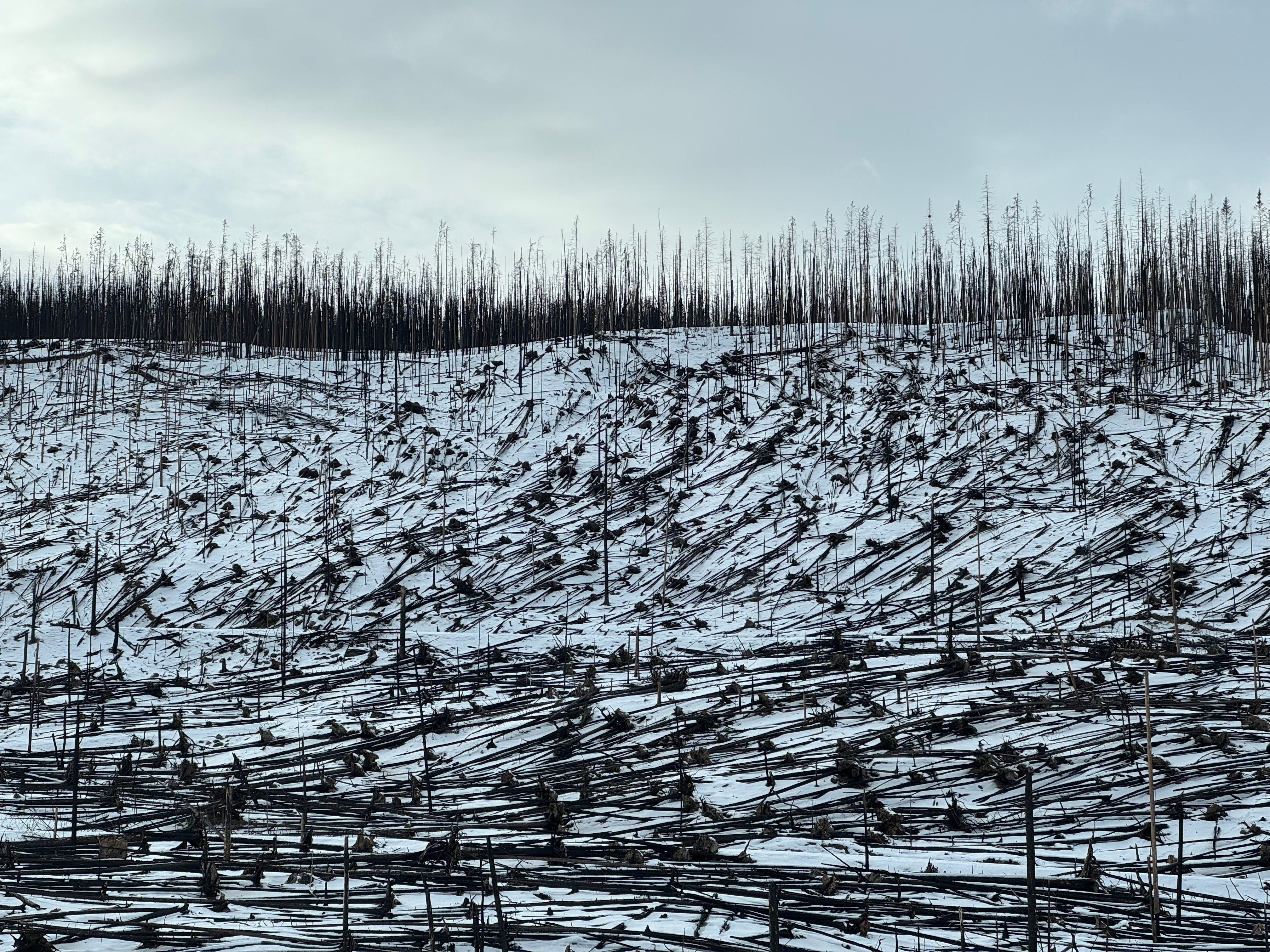
Asking what we can do to change the current course of humanity seems futile. We’ve spent decades tweaking our individual habits. We eat less meat or none at all, we haul around our mugs and reusable grocery bags, we ride our bikes instead of driving a car to work — yet here we are, stuck indoors amidst unbearable smoke.
More than three million hectares of forest have burned this year alone in Canada, the Globe and Mail reported last week. Last year, wildfires in Europe ravaged 2.2 million hectares.
Despite our efforts, the planet continues to get hotter. Adopting more sustainable habits seems to account for little when we have no choice but to exist in a system whose survival requires our destruction. I could look back at my grandma’s yard-waste disposal habits and blame her, and those like her, for having contributed to climate change. There’s always someone to blame for the dystopian world we’re living in — the neighbour who insists on driving instead of walking to the grocery store, the friend who enjoys a plate of bacon and eggs each morning, the families who opt for a spacious home in a car-oriented suburb instead of sucking it up in a cramped apartment downtown.
If we ever intended to change anything, however, we had to begin by perceiving ourselves as citizens, rather than as consumers. It is consumption, after all, that’s kept us from taking meaningful action. Instead of dismantling the systems that brought us here, we live to work to pay for the stuff that seems to give our lives meaning. Maybe what we purchase with our labour appears a responsible choice — a vegan-leather jacket, a vehicle that guzzles up electricity rather than oil to run, a retrofitted house in a walkable neighbourhood — but if our current situation indicates anything, it’s that we can’t shop our way out of extinction.
While we traded our planet in exchange for convenience, those who’ve been profiting from our helpless captivity are now free to scour the world for a place where the air is still fresh and temperatures comfortable. It is them who’ve lobbied their way into government backrooms to keep us hostage while growing their fortunes.
Soon they won’t need us anymore. They’ve convinced us that relinquishing our knowledge and skills to a large language model is for our own good, but it’s only their skins they’re saving. From the top, it makes sense to have only a handful of people use what’s left of our planet. Natural selection they’ve dared call it.
Maybe it’s too late to save ourselves from dystopia, but we can still wake up from our consumption-induced slumber and prevent them from taking what’s always belonged to humanity. What else do we have to lose, anyway?
Reluctantly yours,
Ximena.
p.s. i’ll be avoiding reality at the Calgary Folk Fest this weekend. Come say hi if you see me, i seldom bite.
Stuff i’ve written since last time
A Banned Book Club Blooms in Alberta
The Tyee
Will Canmore’s vacancy tax help solve the Alberta resort town’s housing crisis?
The Globe and Mail
A Bagful of Reasons to Create Public Grocers
The Tyee
Calgary’s ‘Confluence’ Gets Complicated
The Tyee
Absolutely brilliant